The Woolwich Rotunda
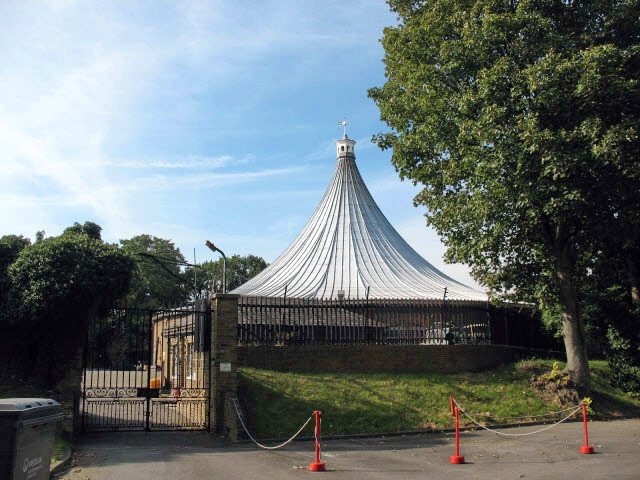
A 24-sided polygon on Woolwich Common, 35.4 metres in diameter. Designed by John Nash in 1814 as a temporary ballroom. Grade II* listed. On Historic England's Heritage at Risk Register since 2007.
The definitive account of the building's history is Emily Cole, Sarah Newsome, and Verena McCaig, The Woolwich Rotunda: From Waltzes to Wargames (Liverpool University Press, 2025). Publisher's page.

Carlton House, 1814
In the spring of 1814, with Napoleon defeated and the allied sovereigns preparing to visit London, the Prince Regent commissioned a series of temporary buildings in the gardens of Carlton House for the celebrations that would follow. The largest was a 24-sided polygonal ballroom, designed by John Nash and erected between May and July 1814 by Nash's assistant William Nixon together with Jeffry Wyatt and William Wyatt.
The first event held in the building was the Wellington Fete of 21 July 1814, a reception for over 2,000 guests in honour of the Duke of Wellington. The building was used again on 1 August for the Grand National Jubilee, a public celebration marking the centenary of the Hanoverian accession and the peace with France.


The structure
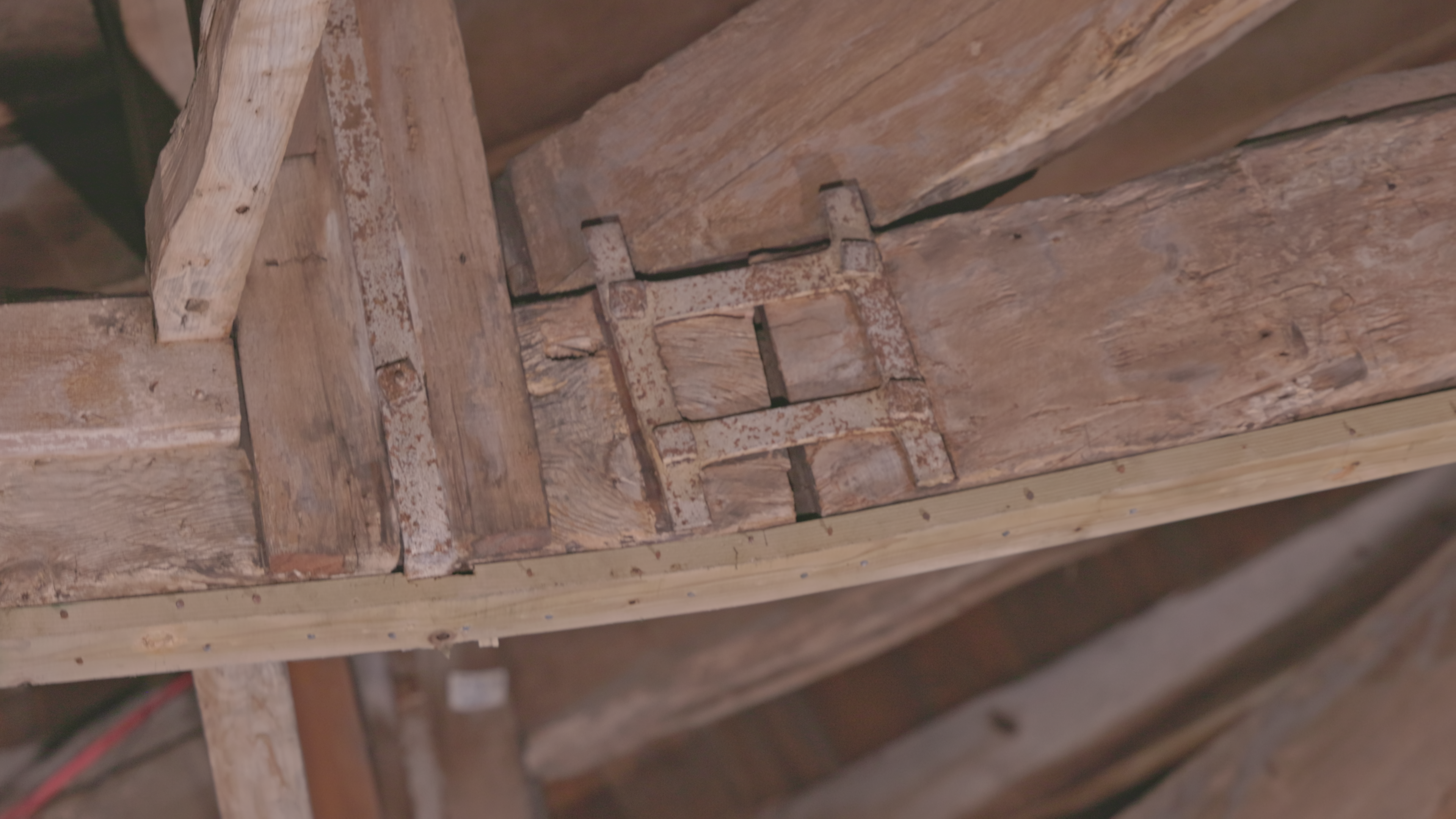
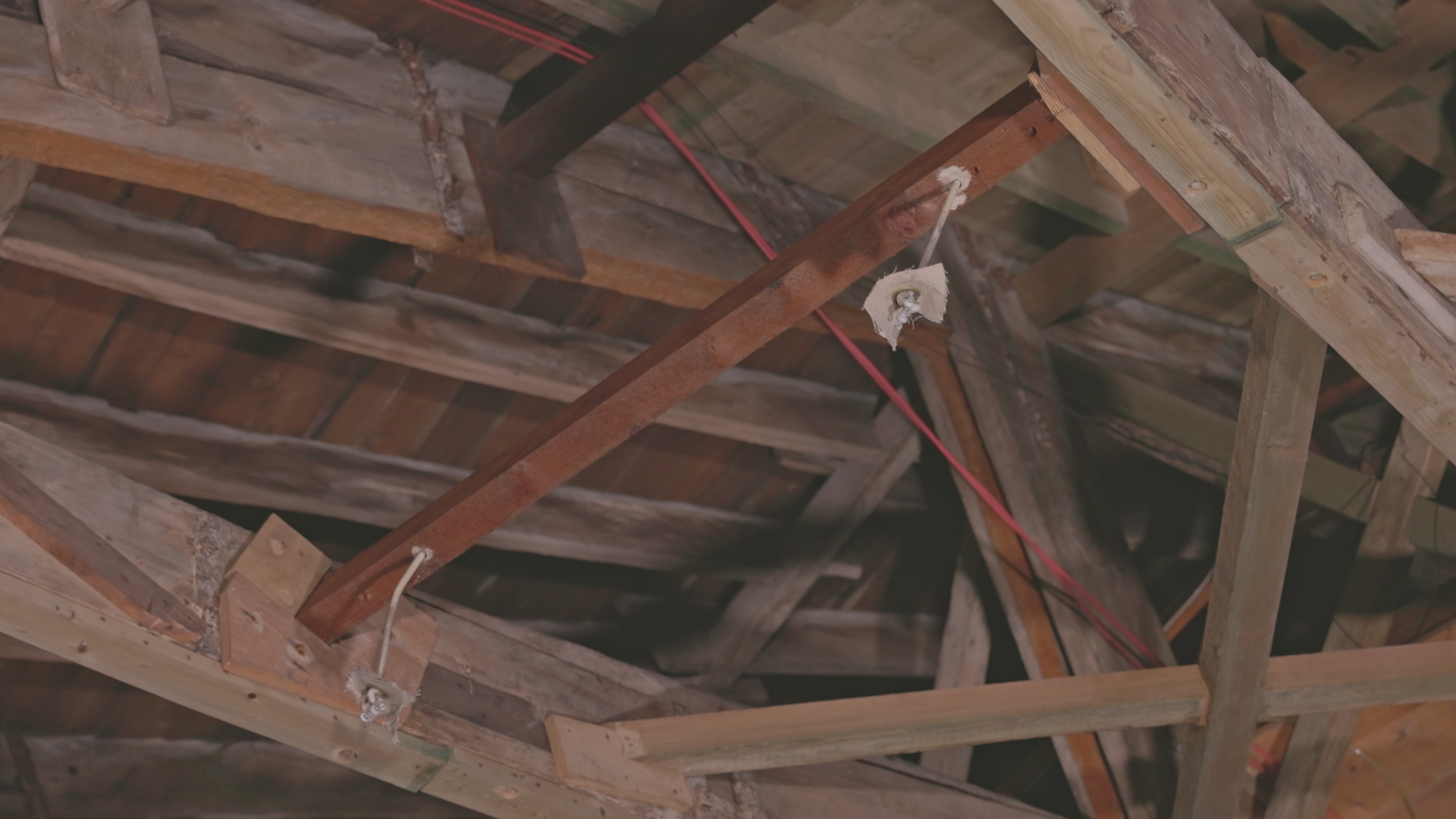
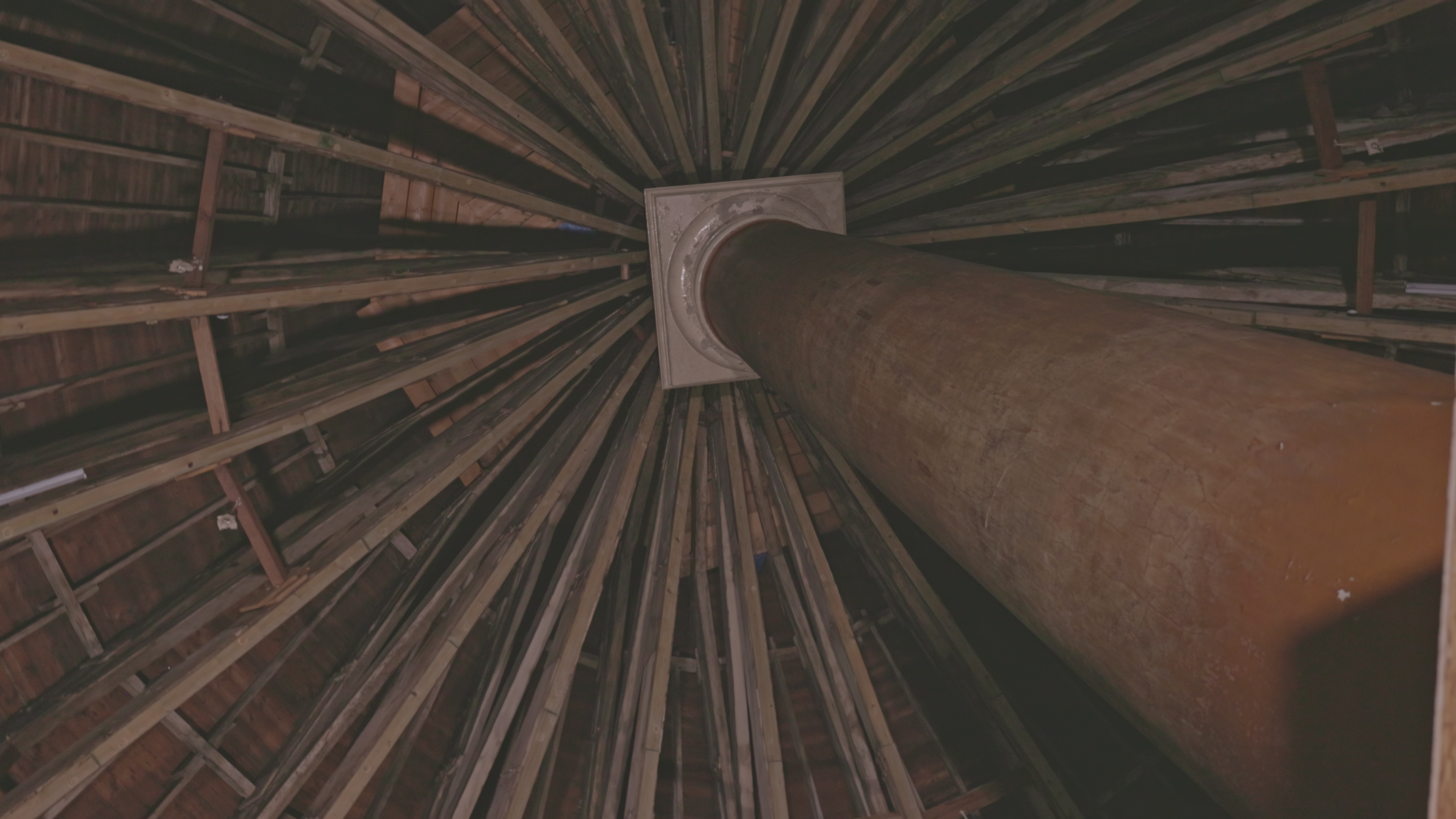
The roof is a conoid form, tent-like rather than domed, supported by 24 principal rafters rising from the perimeter to a ring beam at the apex. The rafters are laminated: built up from thin planks mechanically fastened with forged iron straps, bolts, and pegs. The roof was built by carpenters, William Nixon, Jeffry Wyatt and William Wyatt. This laminated timber construction predates industrialised laminated timber by several decades.
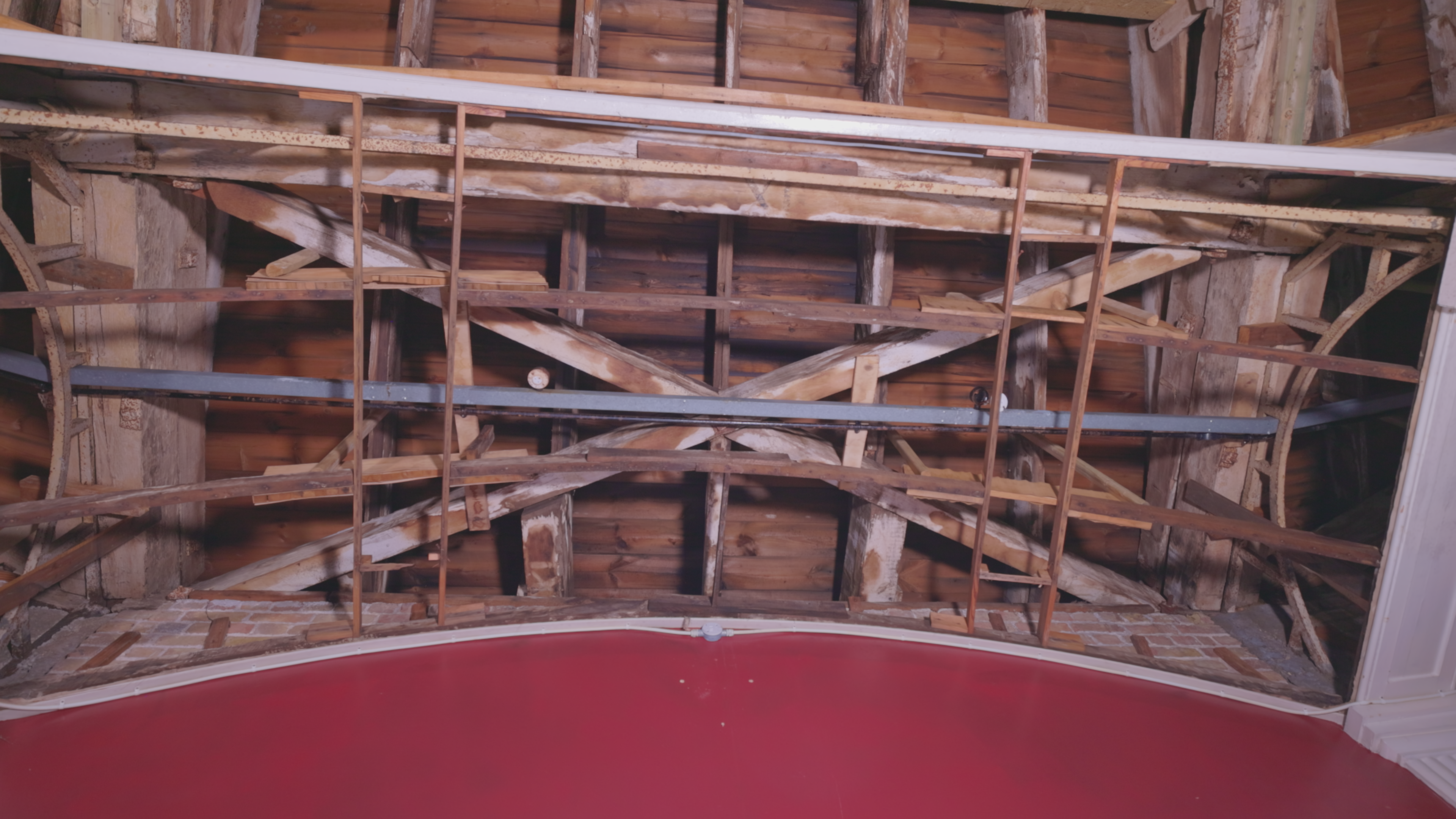
The outward thrust at the base of each rafter was resolved by cross-bracing in the horizontal plane between two concentric rings of 24 perimeter columns. Nash's original drawings specified cast iron ties; what was built, presumably by Nixon and Wyatt, was timber bracing. The result was a self-supporting roof that transmitted only vertical load to the enclosing structure. The question of attribution is not entirely settled. T. F. Hunt, writing in 1830, stated that the roof "was designed or invented by, and executed under the direction of, the late William Nixon," suggesting the structural design may owe as much to Nixon as to Nash.

Transfer to Woolwich, 1818-1820

Nash initially hoped to convert the structure into a church, noting that it "was designed to house a large number of people, and was internally uninhibited by columns, so that sight and sound lines would have been excellent." However, the Prince Regent directed that it be re-erected on Woolwich Common for the Royal Artillery.
The transfer was closely connected to the Royal Military Repository, founded in 1778 by Captain William Congreve the elder as a school for training artillerymen. After the elder Congreve's death in 1814, his son Sir William Congreve 2nd Baronet secured the polygon building for Woolwich. The Office of Works was glad of the arrangement, as it saved them the trouble of storing or selling the materials.
At Woolwich, the building underwent significant modifications. The original timber-panelled walls were replaced with a solid brick drum approximately 660 mm thick, designed by Nash's assistant John Adey Repton and built in Flemish bond using London stock brick. A central column of Doric form in freestone was inserted at the geometric centre. The timber cross-bracing between the column rings was retained.

The Royal Artillery Museum, 1820-2001
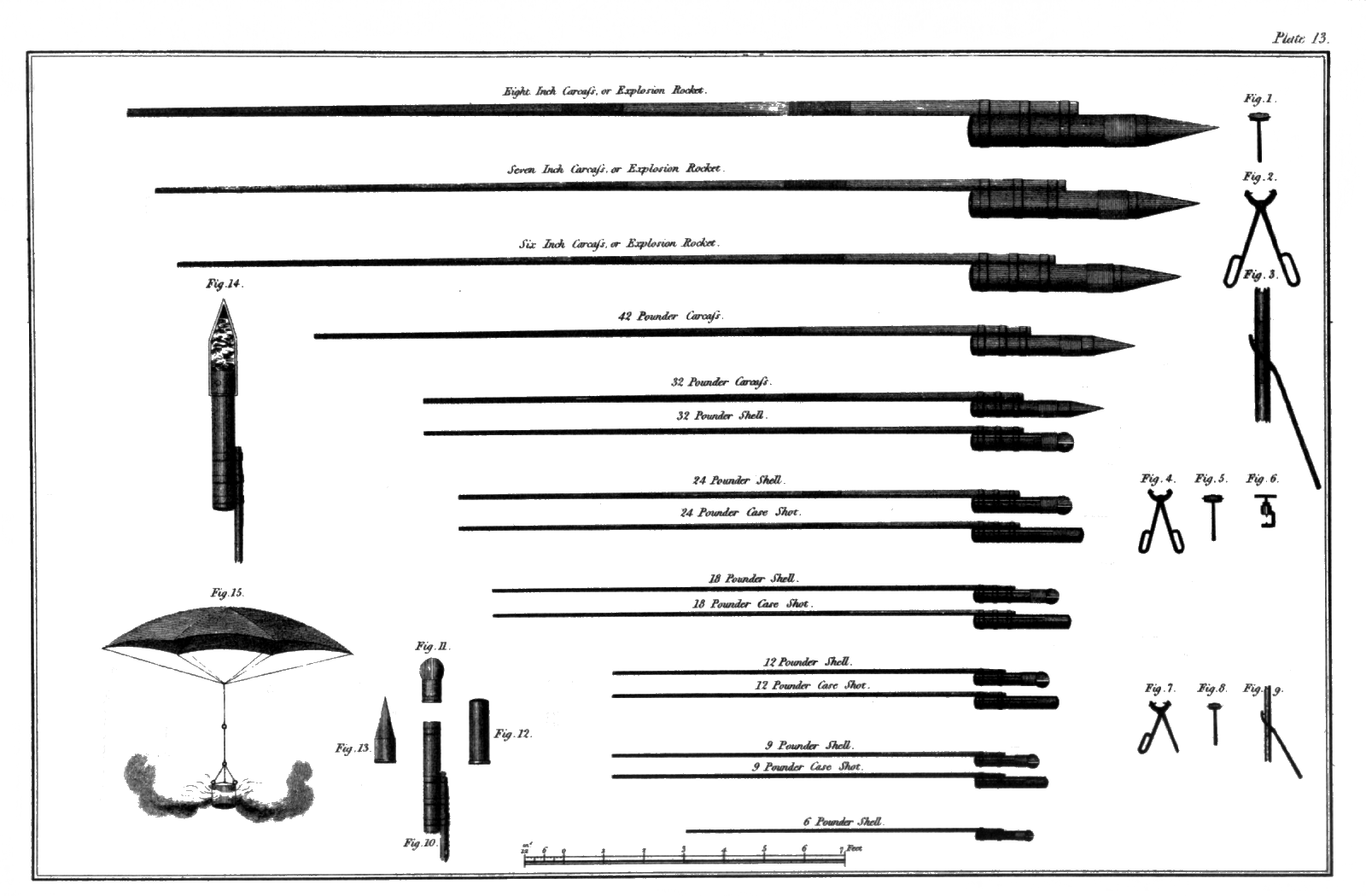
The Rotunda opened as a museum in 1820, one of the earliest purpose-built public museums in the world. The younger Congreve set out its aims as providing "practical instruction for the Officers, Non-commissioned Officers, and Men of the Regiment of Artillery, both on the great scale and with the aid of Drawings and Models." The collection grew to include ordnance, models, trophies, and scientific instruments spanning two centuries of artillery history.
The central Doric column bears the painted names of 39 officers of the Royal Artillery, arranged chronologically from the capital downward. The list begins with Colonel Albert Borgard, the regiment's first Colonel from 1722, and ends with General Sir Edward Bruce Hamley in the 1890s. The names span the regiment's first 170 years and include combat commanders, scientists, explorers, inventors, and writers: Colonel Sir Augustus Simon Frazer, who led the Royal Horse Artillery at Waterloo; General Sir Edward Sabine, President of the Royal Society; Captain William Congreve the elder, who founded the Repository at Woolwich in 1778; and two recipients of the Victoria Cross.



In 1862, under General Sir John Henry Lefroy, the original canvas roof covering was replaced with lead. The canvas and weatherboards had imposed approximately 5-10 kg/m² on the roof structure; lead with sarking and accumulated repairs is estimated at 40-55 kg/m². The lead has been on the building for over 160 years and has heritage significance as later historic fabric.

A major restoration was carried out between 1972 and 1975 by Dove Brothers under the direction of the Property Services Agency. The original timber-encased cast iron wall posts were replaced with reinforced concrete poured into the voids within the brickwork. A concrete floor slab was laid throughout. Specialists from the Princes Risborough laboratory found the laminated timber trusses in reasonable condition. The restoration received a European Architectural Heritage Year award in 1975 and a Civic Trust Award. The Rotunda was designated Grade II* in 1973. Record visitors reached 81,230 in 1977.

The museum closed to the public in 1999. A new museum, Firepower, opened at the nearby Royal Arsenal in 2001, combining the Rotunda collections with the regimental history collection. The building continued to house the reserve collection until approximately 2010.
The Rotunda has not been in regular use since 2001. Without heating or ventilation, water ingress through the deteriorating lead roof has caused progressive decay in the laminated timber rafters.
Decline, 2001-present
After the collections moved to Firepower, the building served briefly as a boxing gym for the King's Troop, Royal Horse Artillery, at neighbouring Napier Lines. It has had no sustained occupied use since approximately 2010. Without heating or ventilation, water ingress through the deteriorating lead roof caused progressive decay in the laminated timber rafters. The building was placed on Historic England's Heritage at Risk Register in 2007, classified as Priority A: immediate risk of further rapid deterioration or loss of fabric, no solution agreed.
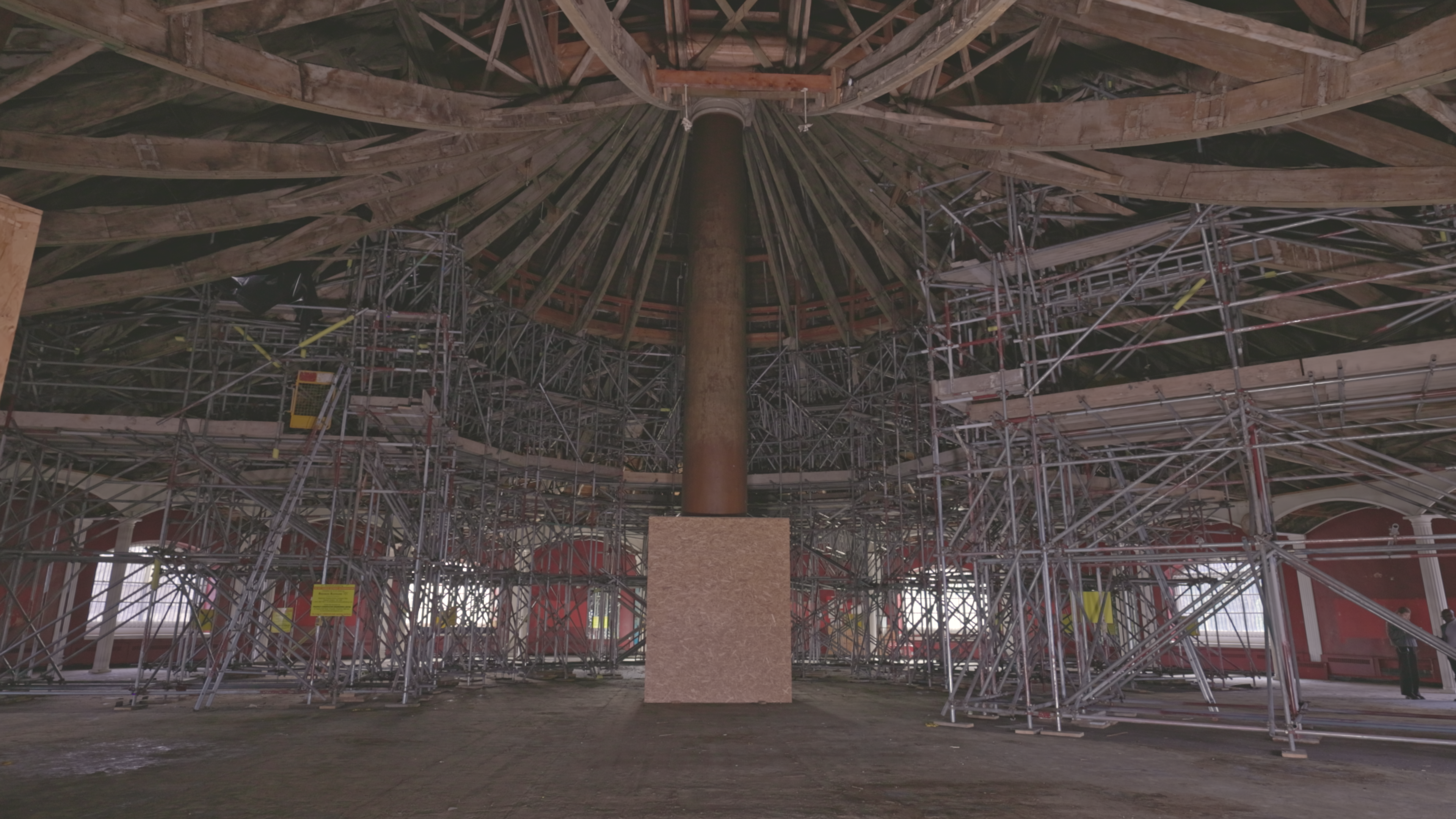
In autumn 2023, emergency stabilisation works were carried out under conservation oversight by Crosby Granger Architects. The 1974 replica canvas ceiling was stripped to allow inspection of the roof structure. Scaffold propping was installed to eight trusses showing structural defects, with a ninth truss propped in winter 2024-25. Nine of the twenty-four trusses are currently propped. The condition survey, updated in January 2025, estimated total repair costs at approximately £3 million.
The disposal
The Woolwich Barracks site, including the Rotunda, is subject to a disposal Supplementary Planning Document prepared by the Royal Borough of Greenwich. The draft SPD, published in October 2025, proposes up to 1,920 new homes alongside commercial and community space, with heritage buildings to be retained and integrated.
In early 2026, the Rotunda and its 1.65-acre curtilage were put on the market by Avison Young on behalf of the Defence Infrastructure Organisation through an informal tender process. The site is classified as Metropolitan Open Land, affording it Green Belt-equivalent protection under the London Plan and limiting development potential to the existing building and its immediate surroundings.
Rotunda Trust has been formed to acquire the building and secure its long-term conservation. Read about the trust.

See Further Reading for sources, links, and image credits.